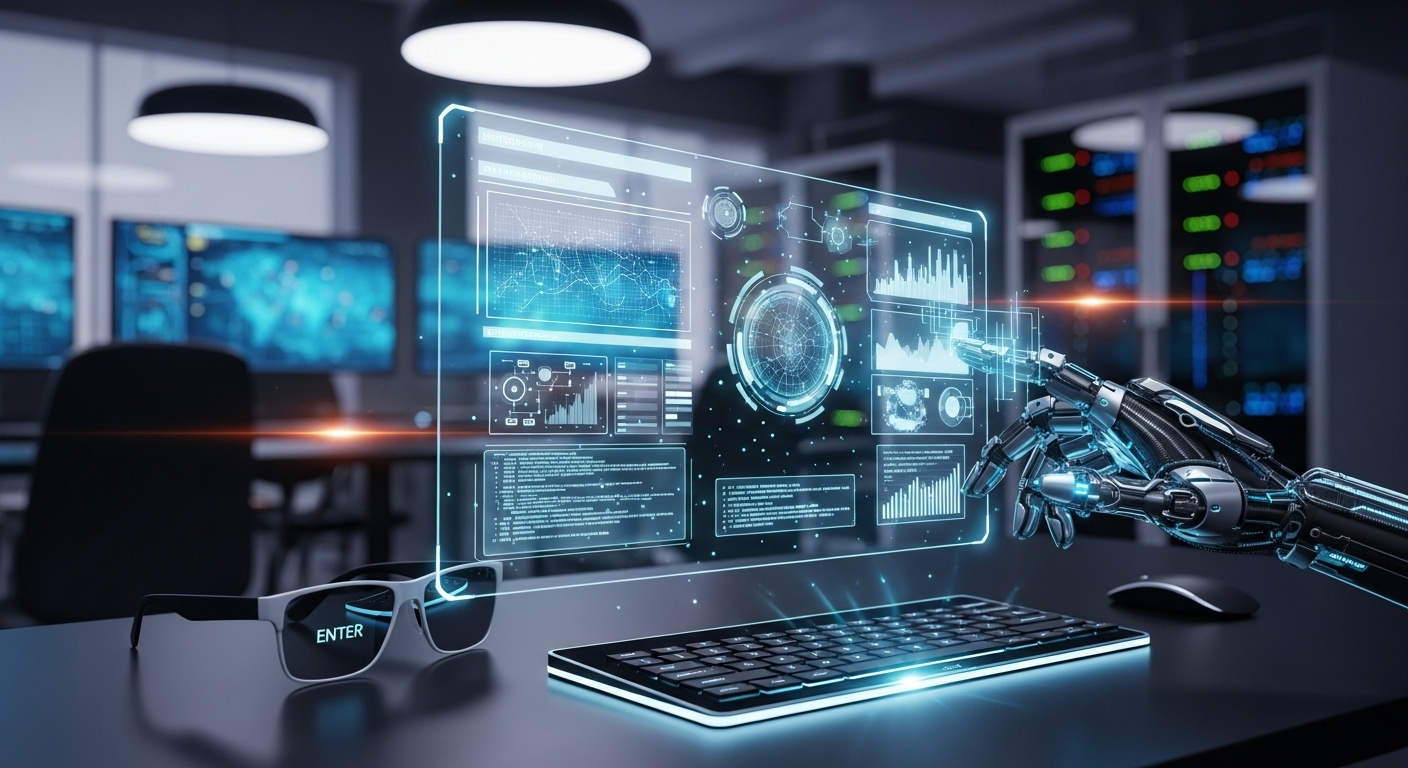

Technology is evolving at a pace that’s both thrilling and, at times, overwhelming. What was once thought to be futuristic is now here, and the way we live, work, and interact with the world is being fundamentally reshaped. From artificial intelligence (AI) to virtual reality (VR), the innovations we see today are laying the foundation for the next era of human progress. But with every advancement comes the responsibility to understand its potential, its impact, and its ethical considerations. In this blog post, we’ll dive into some of the most exciting tech trends currently driving the future.
Artificial Intelligence: The Brainpower Behind Modern Innovation
Artificial Intelligence (AI) is perhaps the most talked-about technology of our time, and for good reason. Once a concept relegated to science fiction, AI has now permeated virtually every sector, from healthcare to finance to entertainment. AI systems, powered by machine learning algorithms, are capable of analyzing vast amounts of data, identifying patterns, and making decisions with speed and accuracy that humans simply can’t match.
In healthcare, AI has shown immense promise. Machine learning models are being used to diagnose diseases, predict patient outcomes, and even assist in creating personalized treatment plans. Similarly, in the world of business, AI-driven tools can analyze consumer behavior, forecast market trends, and optimize supply chains.
However, as AI becomes more integrated into our lives, concerns around ethics, privacy, and job displacement are mounting. How do we ensure that AI decisions are fair? What happens when automation takes over jobs traditionally held by humans? These are crucial questions that society must answer as we continue to innovate.
The Internet of Things: Connecting the World Like Never Before
The Internet of Things (IoT) is another technology that’s changing how we interact with the world around us. IoT refers to the vast network of devices—from smart refrigerators to wearables to connected cars—that are all communicating with each other through the internet.
What makes IoT so powerful is the way it connects everyday objects, allowing them to exchange data and act autonomously. For instance, in smart homes, IoT devices can learn your preferences and automatically adjust settings, such as lighting, temperature, or security, based on your behavior. Similarly, in cities, IoT technology is being used to improve traffic management, monitor air quality, and streamline waste collection.
While the benefits of IoT are clear, there are also challenges—chiefly around data security and privacy. As more devices collect and share information, there is a growing concern about how that data is stored and protected. If not managed properly, IoT devices could become vulnerable to cyberattacks, making it crucial for both developers and users to prioritize security.
5G: Accelerating Connectivity for the Future
5G technology is poised to be a game-changer. With its faster speeds, lower latency, and greater capacity, 5G will unlock the potential of many other technologies, such as AI, autonomous vehicles, and the Internet of Things.
In simple terms, 5G will deliver download and upload speeds that are significantly faster than current 4G networks, enabling seamless streaming, real-time communication, and enhanced connectivity. This is especially crucial in the age of IoT, where the number of connected devices is expected to grow exponentially.
For industries like healthcare, 5G will enable real-time remote surgeries and telemedicine, allowing doctors to perform procedures from anywhere in the world with minimal latency. In transportation, self-driving cars will rely on 5G networks to communicate with one another and with infrastructure, improving safety and efficiency.
As promising as 5G is, its rollout is not without challenges. The infrastructure required to support 5G networks is expensive, and not all regions have the resources to make the necessary upgrades. Additionally, concerns around privacy and health effects from increased electromagnetic radiation are part of the ongoing debate surrounding 5G adoption.
Blockchain: Beyond Cryptocurrencies
Blockchain technology, once synonymous with cryptocurrencies like Bitcoin, is now being explored for a wide range of applications beyond digital currencies. At its core, blockchain is a decentralized ledger that records transactions across many computers in a way that makes it nearly impossible to alter or hack.
This transparency and security make blockchain an ideal solution for industries where trust and verification are paramount. For example, in supply chain management, blockchain can be used to track the movement of goods from manufacturer to consumer, ensuring authenticity and preventing fraud. Similarly, in healthcare, it can store patient records in a secure and immutable manner, making it easier to share information across different healthcare providers.
But blockchain’s potential extends far beyond finance and logistics. It could transform sectors like voting, real estate, and even intellectual property, by ensuring transparency, reducing fraud, and enabling secure peer-to-peer transactions. While blockchain still faces challenges like scalability and energy consumption, its transformative power cannot be denied.
Virtual Reality and Augmented Reality: Blurring the Lines Between Digital and Physical Worlds
Virtual Reality (VR) and Augmented Reality (AR) are technologies that are fundamentally changing how we perceive the world around us. While VR immerses users in entirely digital environments, AR overlays digital information onto the physical world, blending the two realities in a seamless way.
In entertainment, VR has already made waves, offering gamers and moviegoers a fully immersive experience that allows them to “step into” digital worlds. In education, VR is being used for virtual field trips, anatomy lessons, and simulations of historical events. Meanwhile, AR is enhancing industries like retail, where shoppers can visualize how products might look in their homes before making a purchase.
These technologies also have practical applications in areas like medicine and training. Surgeons can practice complex procedures in a virtual environment, and soldiers or pilots can train in simulations that replicate real-world conditions.
However, VR and AR also raise questions about mental health, privacy, and the potential for escapism. As these technologies continue to develop, we must carefully consider their impact on society, particularly on younger generations who may become increasingly immersed in virtual worlds.
Biotechnology: Advancing Health and Longevity
Biotechnology is another field where technology is advancing at breakneck speed. From gene editing to personalized medicine, the healthcare industry is on the cusp of a revolution that could dramatically extend life expectancy and improve quality of life.
The advent of CRISPR-Cas9, a revolutionary gene-editing tool, has opened up new possibilities in treating genetic disorders, curing diseases like cancer, and even preventing hereditary conditions before birth. In addition, advancements in personalized medicine, which uses a person’s genetic makeup to determine the best treatment options, are paving the way for more effective and individualized healthcare solutions.
Biotechnology also extends to aging research, with scientists exploring ways to extend human lifespan and improve overall health. Whether through stem cell therapy, regenerative medicine, or anti-aging drugs, the possibilities for improving health outcomes are expanding rapidly.
Despite the exciting potential, the field of biotechnology raises ethical dilemmas—particularly regarding gene editing. As scientists gain the ability to alter the human genome, questions surrounding consent, equity, and potential misuse become more pressing. Society must ensure that these technologies are used responsibly and for the benefit of all.
The Future of Work: Adapting to a Tech-Driven World
The future of work is increasingly being shaped by technology. Automation, AI, and remote work tools are transforming how and where we do our jobs, creating a more flexible and interconnected global workforce.
In industries like manufacturing and logistics, robots and AI systems are taking over repetitive tasks, allowing human workers to focus on more complex and creative endeavors. In offices, cloud computing and collaboration tools have enabled remote work to become the norm, with employees able to work from anywhere in the world.
However, these shifts also present challenges. The rise of automation could lead to job displacement in certain sectors, and workers will need to acquire new skills to stay relevant in a rapidly changing job market. Additionally, the rise of gig and remote work has sparked debates about labor rights, job security, and the future of the traditional office.
As the workplace continues to evolve, it will be important for workers, businesses, and governments to collaborate on strategies for reskilling and adapting to a tech-driven economy.
Conclusion: A Tech-Driven Future Awaits
The technologies of today are shaping the world of tomorrow. From AI and blockchain to VR and biotechnology, innovations are transforming industries, improving lives, and opening new doors of possibility. But as we venture into this exciting future, it is important to remember that with great power comes great responsibility.
As we embrace these advancements, we must ensure that we’re using technology ethically and responsibly, addressing the challenges it presents, and making sure it serves humanity as a whole. The future of tech is bright, but only if we approach it with foresight and care. The world we’re building today will define the future we’ll live in tomorrow.