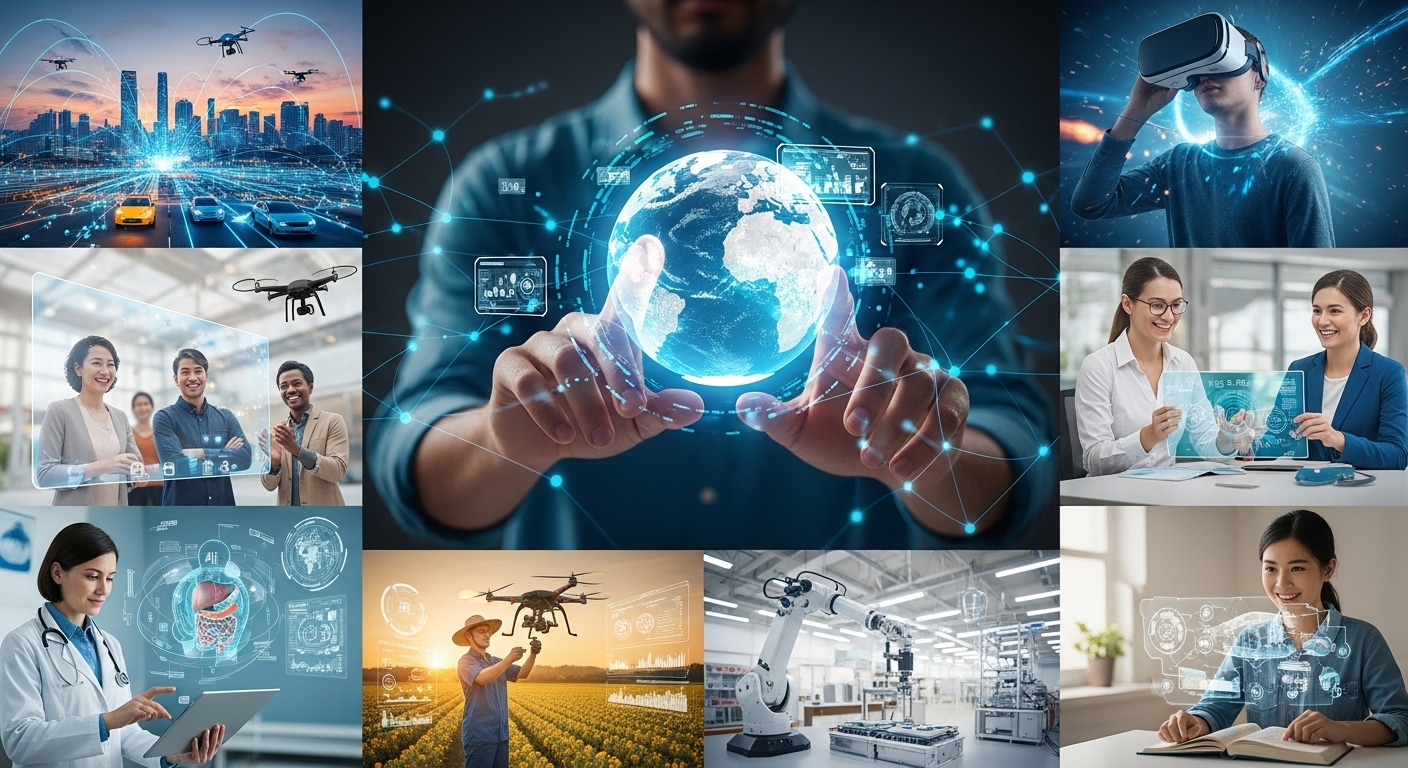

The world of technology is evolving faster than ever before, with groundbreaking innovations reshaping every aspect of our lives. From artificial intelligence to blockchain and quantum computing, we are on the cusp of a technological revolution that promises to bring about major changes in how we live, work, and interact with the world. In this blog post, we explore some of the most exciting technological advancements that are poised to define the future and how they could shape our everyday experiences.
Artificial Intelligence: The Next Frontier of Innovation
Artificial Intelligence (AI) is arguably one of the most transformative technologies of our time. While AI has already made significant strides in industries like healthcare, finance, and entertainment, its full potential is only beginning to unfold. The next decade will likely see AI move from being a tool to enhance productivity to a more integral part of daily life.
- AI in Healthcare: AI has the power to revolutionize healthcare by improving diagnostic accuracy, personalizing treatment plans, and even predicting potential health risks before they become serious. AI-powered tools are already helping doctors interpret medical data and images more accurately, and in the future, AI could play a major role in drug discovery, making healthcare more proactive than ever.
- AI for Everyday Tasks: From voice assistants like Alexa and Siri to more advanced AI systems that power recommendation engines on platforms like Netflix and Spotify, AI is already deeply embedded in our daily lives. As AI continues to advance, we can expect even more personalized experiences, where the technology learns our preferences and behaviors, providing us with seamless interactions.
- Ethical AI: As AI becomes more pervasive, the conversation around its ethical implications will intensify. Issues like privacy, bias in algorithms, and the displacement of jobs will require careful consideration. The next phase of AI development will focus not only on improving functionality but also ensuring that these systems are fair, transparent, and aligned with human values.
Quantum Computing: A Game-Changer for Complex Problems
Quantum computing is one of the most exciting—and potentially world-changing—technologies emerging today. Unlike classical computers, which use bits to process information in binary (0s and 1s), quantum computers use qubits, which can represent multiple states simultaneously. This ability allows quantum computers to solve problems that would take traditional computers thousands of years to process in a matter of seconds.
- Solving Complex Problems: Quantum computing holds immense promise in fields such as cryptography, material science, and drug development. For instance, it could significantly accelerate the discovery of new materials and drugs by simulating complex molecular structures far more efficiently than current systems allow. This could lead to breakthroughs in everything from clean energy solutions to personalized medicine.
- Security and Cryptography: Quantum computing has the potential to disrupt current encryption techniques, which rely on the difficulty of factoring large numbers. However, it also presents an opportunity to create new forms of encryption that are virtually unbreakable. As quantum computing becomes more advanced, the race to develop quantum-resistant security systems will become a key focus.
- Still in Its Infancy: While quantum computers have already demonstrated their capabilities in controlled environments, practical, large-scale quantum computing is still a few years away. Nevertheless, companies and research institutions around the world are making rapid progress, and the next decade could see major advancements that push quantum computing into real-world applications.
The Internet of Things (IoT): A Hyper-Connected World
The Internet of Things (IoT) is the network of physical objects that are embedded with sensors, software, and other technologies to connect and exchange data over the internet. The potential of IoT is vast, and it is transforming everything from smart homes to industrial operations.
- Smart Homes: IoT devices are already making homes smarter, with connected thermostats, lights, security systems, and appliances. As IoT continues to evolve, homes will become even more automated and responsive. Imagine a home where your refrigerator orders groceries for you, or your thermostat adjusts the temperature based on your daily routine.
- IoT in Healthcare: The healthcare industry is also benefiting from IoT. Wearables that monitor vital signs, smart medical devices that track patient data in real-time, and even remote surgeries powered by connected devices are all part of the future of IoT in healthcare. These innovations can lead to more accurate diagnostics and personalized treatments, as well as better patient outcomes.
- Smart Cities: IoT technology is playing a central role in the development of smart cities. By using connected sensors to monitor traffic, air quality, and energy consumption, cities can optimize resources, reduce waste, and improve the quality of life for residents. In the near future, IoT could help create cities that are not just smart but sustainable and efficient as well.
The Metaverse: A New Dimension of Virtual Reality
The concept of the metaverse has gained significant attention in recent years, with tech giants like Facebook (now Meta) betting big on its future. The metaverse is essentially a collective virtual shared space, created by the convergence of virtually enhanced physical reality and augmented reality (AR), where users can interact with each other and the digital world in real-time.
- Immersive Experiences: In the metaverse, users will be able to experience virtual environments that feel incredibly real, thanks to advanced virtual reality (VR) and AR technologies. From attending concerts and conferences to exploring digital worlds and playing games, the metaverse promises to open up new possibilities for entertainment, education, and socializing.
- Virtual Workspaces: As remote work becomes more prevalent, the metaverse could provide a new avenue for collaboration. Virtual offices and meeting rooms will allow teams to interact as if they were in the same physical space, using avatars and digital tools to communicate and collaborate. This could enhance the remote work experience and make it more engaging.
- New Economic Opportunities: The metaverse is also creating new economic opportunities. Virtual real estate, digital assets, and services are already being bought, sold, and traded within virtual spaces. The rise of non-fungible tokens (NFTs) is also paving the way for virtual ownership, giving users the ability to buy and sell digital assets in the metaverse.
Blockchain and Decentralized Technology: The Future of Trust
Blockchain technology, which powers cryptocurrencies like Bitcoin and Ethereum, is poised to have a transformative impact far beyond digital currency. By providing a decentralized, transparent, and secure way of storing and transferring data, blockchain has the potential to disrupt industries ranging from finance to supply chains and beyond.
- Decentralized Finance (DeFi): One of the most exciting applications of blockchain is decentralized finance, or DeFi. By eliminating intermediaries like banks, DeFi platforms allow people to access financial services such as lending, borrowing, and trading in a completely decentralized manner. This has the potential to make financial systems more inclusive and accessible to people around the world.
- Supply Chain Transparency: Blockchain can also enhance the transparency and efficiency of supply chains. By recording every transaction on an immutable ledger, blockchain allows businesses to track products from their origin to their final destination, ensuring quality, authenticity, and ethical sourcing. This can help reduce fraud and improve trust between consumers and producers.
- Smart Contracts and Beyond: Blockchain technology is also enabling the development of smart contracts—self-executing contracts with the terms of the agreement directly written into code. This can automate a wide range of processes, from legal agreements to real estate transactions, making them faster, cheaper, and more secure.
Conclusion: The Future is Now
The next decade promises to be one of the most exciting periods in the history of technology. With innovations like artificial intelligence, quantum computing, IoT, the metaverse, and blockchain, the possibilities are endless. While challenges remain—such as ethical concerns, privacy issues, and the need for new regulations—the future of tech holds immense potential to transform the way we live and work. As we continue to embrace these innovations, we will have the opportunity to build a smarter, more connected, and more sustainable world. The tech revolution is already underway, and we are just beginning to see the tip of the iceberg.