
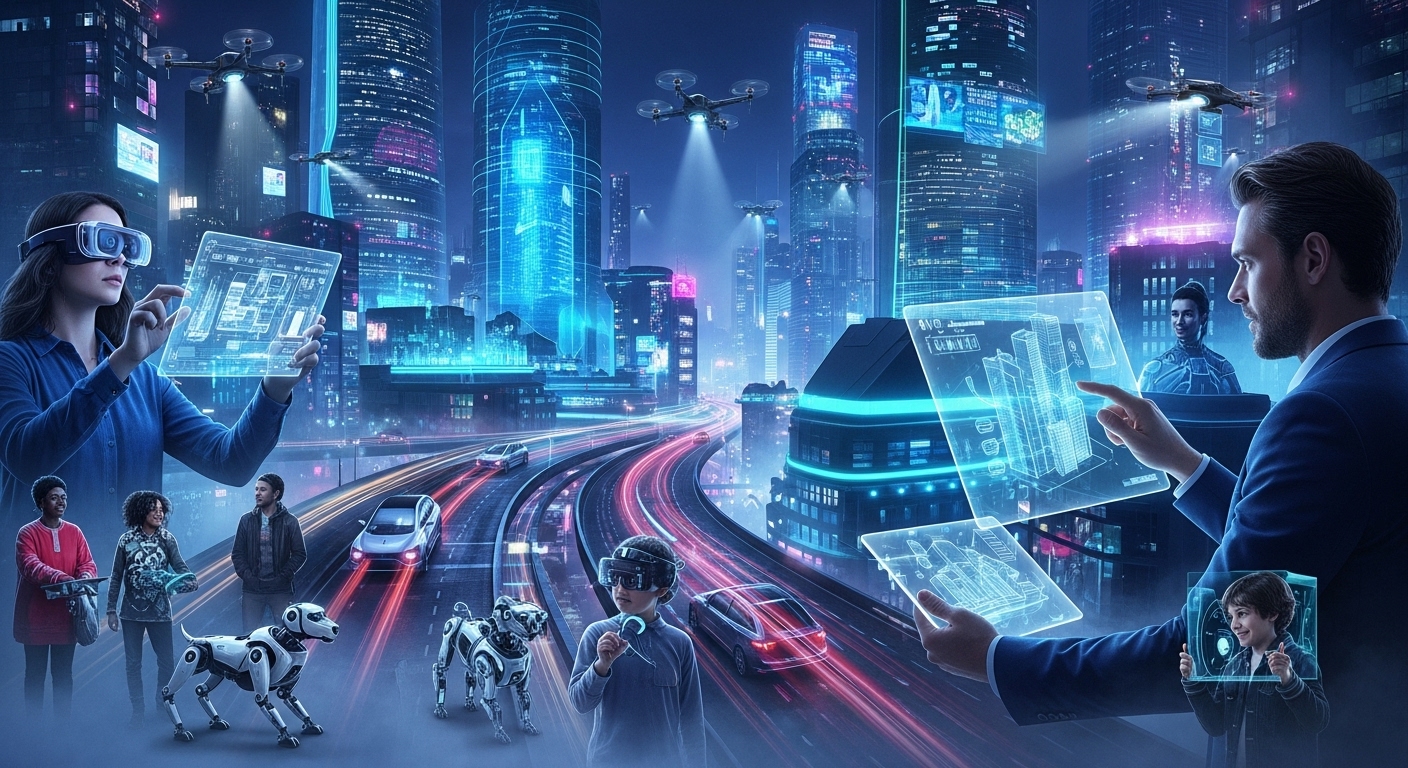
Introduction: The Speed of Change in the Tech World
Technology is evolving at a pace that is hard to keep up with. The innovations that once seemed like distant dreams are now shaping our everyday lives, making the impossible possible. Whether it’s the rise of artificial intelligence or the promise of quantum computing, new advancements are not only revolutionizing industries but also altering the way we think, interact, and live. This post will dive into some of the most exciting and impactful technologies that are transforming the world, offering a glimpse of what the future holds.
Artificial Intelligence: The Brain of the Future
Artificial intelligence (AI) has moved from the realm of science fiction into reality, impacting nearly every industry. What sets AI apart is its ability to process vast amounts of data and make decisions or predictions based on patterns. From simple voice assistants to complex machine learning algorithms, AI is making systems smarter and more autonomous.
In healthcare, AI has been used to analyze medical images, predict disease outbreaks, and even assist in developing personalized treatment plans. In business, AI helps companies enhance customer service through chatbots and optimize operations through predictive analytics. Even in the creative world, AI is beginning to generate music, art, and writing, showing the versatility of this technology.
As AI becomes more advanced, it holds the potential to solve some of the world’s most complex problems—whether it’s in the form of improved medical treatments, more efficient supply chains, or smarter cities. However, this advancement also brings concerns over ethics, job displacement, and the need for strong regulatory frameworks to ensure that AI benefits humanity as a whole.
Blockchain: Beyond Cryptocurrency
When people think of blockchain, cryptocurrency like Bitcoin often comes to mind. While blockchain was indeed the backbone of digital currencies, its applications extend far beyond that. Blockchain is essentially a decentralized, secure, and transparent way of storing data. The data is stored in blocks that are linked together in a chain, making it nearly impossible to alter or hack.
This technology is poised to transform a variety of sectors. In the financial industry, blockchain can provide secure, faster, and cheaper transactions by eliminating intermediaries such as banks. In supply chains, it offers complete transparency, allowing consumers and businesses to track products from origin to final destination.
Blockchain is also making waves in fields such as healthcare, where it can be used to securely store patient records and facilitate their sharing between doctors, improving care coordination. The technology also holds promise in voting systems, ensuring election results are tamper-proof and transparent. As blockchain continues to gain traction, we will likely see more industries adopting it for a variety of use cases, fundamentally altering how data is stored, shared, and verified.
The Internet of Things: A Connected World
The Internet of Things (IoT) refers to the vast network of connected devices that communicate with each other via the internet. From smart homes and wearable health trackers to industrial machines and even connected vehicles, IoT is transforming the way we interact with the world.
At home, IoT has brought us smart thermostats that adjust to our preferences, refrigerators that alert us when we need groceries, and security systems that we can monitor remotely. On a larger scale, cities are being transformed into “smart cities” where traffic lights, water systems, and energy grids are optimized using IoT devices.
In the healthcare sector, IoT is enabling remote monitoring of patients’ vitals, allowing doctors to track conditions in real time and offer more personalized care. In agriculture, IoT sensors can monitor soil conditions, optimize irrigation, and predict harvest times. The possibilities are endless, but with this interconnectivity comes the need for robust cybersecurity measures to protect sensitive data and ensure privacy.
Quantum Computing: The Next Frontier in Computing Power
Quantum computing is one of the most exciting—and mind-boggling—fields of research today. Unlike classical computers, which use bits to process information, quantum computers use qubits. Qubits can represent multiple states simultaneously, which allows quantum computers to perform complex calculations at speeds unimaginable for traditional systems.
This leap in processing power could revolutionize industries such as medicine, finance, and logistics. In healthcare, quantum computers could simulate molecular structures to accelerate drug discovery and create more effective treatments. In finance, they could optimize trading strategies and assess risk much faster than current systems. Quantum computing also has the potential to crack encryption methods, which could have both positive and negative consequences depending on how the technology is applied.
Although quantum computing is still in its early stages, the potential it holds could unlock solutions to some of the most pressing problems facing humanity, from climate change to disease prevention. As researchers continue to make strides, we are likely only scratching the surface of what quantum computing can accomplish.
Augmented and Virtual Reality: Redefining Human Interaction
Augmented Reality (AR) and Virtual Reality (VR) are two technologies that are dramatically changing how we experience the world. While VR immerses users in entirely digital environments, AR overlays digital information onto the real world, enriching how we interact with our surroundings.
In gaming, VR has already made waves by offering immersive experiences that transport players into virtual worlds. Meanwhile, AR has become popular with mobile apps like Pokémon Go and has found applications in sectors like retail and education. For example, AR allows shoppers to try on clothes virtually or visualize furniture in their homes before making a purchase.
In healthcare, VR is being used for therapeutic purposes, such as helping patients with PTSD undergo exposure therapy in controlled, virtual environments. AR is enhancing surgical precision by providing doctors with real-time data and 3D images during procedures. As both technologies continue to mature, they will likely redefine the ways we work, play, and interact with the world around us.
5G: The Future of Connectivity
5G is the next-generation mobile network that promises faster speeds, lower latency, and more reliable connections compared to its predecessors. While the rollout of 5G is still underway, its potential to revolutionize industries is already clear.
For consumers, 5G will enable faster download speeds, smoother video streaming, and better connectivity for mobile devices. But the real impact of 5G lies in its ability to support an increasingly connected world. It will be the foundation for innovations like smart cities, autonomous vehicles, and more advanced IoT applications.
5G’s low latency will allow for real-time communication between devices, which is crucial for technologies such as self-driving cars, where split-second decisions can be life or death. It will also allow for high-bandwidth applications like augmented and virtual reality to become mainstream, delivering seamless experiences that were previously impossible with slower networks.
Ethical Considerations and Challenges in Emerging Technologies
With the rapid advancement of technology comes the need for thoughtful consideration of the ethical, social, and environmental impacts. As AI, blockchain, and other technologies become more integrated into our lives, questions about privacy, security, and job displacement need to be addressed.
For example, AI systems must be designed to avoid biases, particularly in areas like hiring and criminal justice. Blockchain, while offering transparency, could also be misused for illegal activities due to its anonymity features. As the internet of things grows, so too do concerns about data security and surveillance.
It is critical for policymakers, technologists, and ethicists to work together to ensure that technological innovations are developed and deployed responsibly. Only then can we ensure that these advancements lead to a more equitable, secure, and sustainable future.
Conclusion: The Tech-Driven Future Awaits
The world is on the cusp of a new era of technological innovation. AI, blockchain, IoT, quantum computing, 5G, and AR/VR are just some of the transformative technologies that will define our future. These innovations hold the potential to solve complex problems, create new opportunities, and improve our lives in ways we have only begun to imagine.
However, with great power comes great responsibility. As we continue to embrace these technological advancements, we must remain mindful of their broader societal impacts and work towards ensuring they are used ethically and inclusively. The future of technology is not just about building smarter machines—it’s about building a smarter, more connected, and more equitable world for everyone.