
Introduction
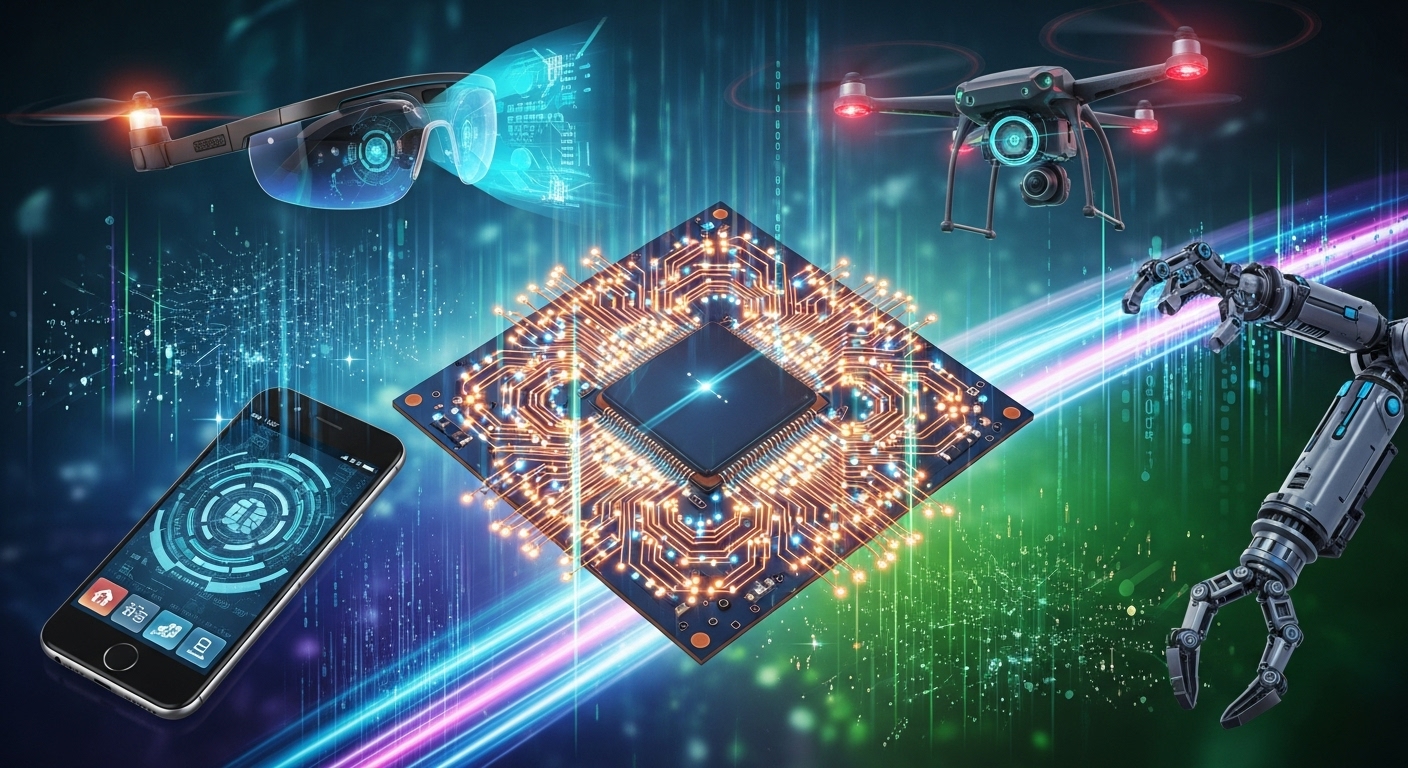
Technology is no longer a distant concept confined to laboratories or sci-fi movies; it has become an invisible yet indispensable part of our daily lives. From the smartphones in our pockets to the algorithms that drive online recommendations, technology shapes the way we live, work, and interact. The pace of innovation is accelerating, and emerging technologies are beginning to redefine the very fabric of society. In this blog, we will explore some of the most transformative technological advancements, their potential, and how they are changing the world around us.
Artificial Intelligence: The New Brain of Technology
Artificial Intelligence (AI) has evolved far beyond its early days of rule-based systems. Today, AI powers applications ranging from voice assistants and chatbots to complex predictive analytics in finance, healthcare, and logistics. Machine learning algorithms can now analyze massive datasets, recognize patterns, and even make decisions with minimal human intervention. The implications of AI are vast. In healthcare, AI algorithms assist doctors in diagnosing diseases faster and more accurately. In transportation, AI is the driving force behind self-driving vehicles, promising safer and more efficient roads. AI is no longer a supporting tool; it is becoming the brain behind many technological solutions.
Despite its many benefits, AI also raises significant ethical concerns. Questions about privacy, algorithmic bias, and job displacement are becoming increasingly relevant. Companies and governments are tasked with developing frameworks that balance innovation with accountability, ensuring that AI serves humanity rather than undermines it.
Internet of Things: Connecting the World Around Us
The Internet of Things (IoT) refers to the vast network of interconnected devices that communicate and share data. From smart refrigerators that track grocery usage to wearable fitness trackers that monitor heart rates, IoT is seamlessly integrating technology into everyday objects. This interconnectedness allows for unprecedented levels of convenience and efficiency. Smart cities use IoT technology to manage traffic flow, reduce energy consumption, and improve public services. Industries leverage IoT sensors to monitor machinery in real-time, predicting maintenance needs and reducing downtime.
However, IoT is not without challenges. Security remains a critical concern, as every connected device becomes a potential entry point for cyberattacks. Additionally, the vast amounts of data generated by IoT devices necessitate robust data management strategies to extract meaningful insights. Nevertheless, the promise of a fully connected world continues to drive innovation and investment in IoT technology.
Blockchain: Beyond Cryptocurrency
Blockchain technology, widely recognized as the backbone of cryptocurrencies like Bitcoin, is increasingly being applied in sectors far beyond digital currencies. At its core, blockchain is a decentralized ledger that records transactions in a secure, transparent, and immutable manner. This technology offers the potential to revolutionize industries such as supply chain management, healthcare, and finance by providing verifiable records and reducing fraud.
In supply chain management, blockchain enables companies to track the journey of goods from origin to consumer, ensuring transparency and authenticity. In healthcare, patient records can be securely stored and accessed across multiple institutions without compromising privacy. The financial sector benefits from blockchain’s ability to streamline transactions, reduce intermediaries, and lower costs. While challenges such as scalability and energy consumption remain, blockchain is steadily gaining traction as a transformative technology.
Augmented and Virtual Reality: Redefining Experiences
Augmented Reality (AR) and Virtual Reality (VR) are no longer confined to gaming or entertainment. These immersive technologies are revolutionizing industries ranging from education to retail. AR overlays digital information onto the real world, enhancing how we interact with our environment. For instance, furniture retailers allow customers to visualize how a piece of furniture will look in their home before making a purchase. VR, on the other hand, creates fully immersive digital environments that can simulate real-world experiences.
In education, VR allows students to explore historical sites or conduct virtual laboratory experiments, enhancing learning through experiential engagement. In healthcare, VR is being used for surgical training and therapy for patients with phobias or PTSD. AR and VR technologies are expanding the boundaries of human interaction, offering new ways to experience and understand the world.
5G Technology: Powering the Next Wave of Innovation
The rollout of 5G networks is set to redefine connectivity on a global scale. With significantly higher data speeds, lower latency, and greater device capacity, 5G technology enables innovations that were previously impossible. Autonomous vehicles, remote surgeries, and large-scale IoT deployments rely on ultra-fast, reliable connections that only 5G can provide.
Beyond speed, 5G has the potential to transform industries by supporting real-time data processing and analysis. Smart factories can operate more efficiently, cities can implement advanced traffic management systems, and entertainment experiences can become more interactive and immersive. As 5G continues to expand, it will serve as the backbone for a new era of technological innovation, connecting people, devices, and systems like never before.
Quantum Computing: A Glimpse into the Future
Quantum computing is one of the most exciting and challenging frontiers in technology. Unlike classical computers, which use bits to represent information as 0s or 1s, quantum computers use qubits that can exist in multiple states simultaneously. This property allows quantum computers to perform certain calculations exponentially faster than classical systems.
Quantum computing has the potential to revolutionize fields such as cryptography, drug discovery, and climate modeling. Complex problems that would take classical computers millions of years to solve could be addressed in mere seconds by quantum systems. However, building practical, large-scale quantum computers remains a formidable challenge, requiring breakthroughs in error correction, qubit stability, and scalable architectures. Despite these hurdles, the progress in quantum research suggests that a new computational era is on the horizon.
Sustainable Technology: Innovations for a Greener World
As technology advances, so does the need to ensure it supports environmental sustainability. Renewable energy technologies such as solar and wind power are becoming more efficient and cost-effective, while innovations in energy storage, such as advanced batteries, are enabling the wider adoption of clean energy solutions. Smart grids, powered by AI and IoT, optimize energy distribution, reduce waste, and enhance resilience against disruptions.
Sustainable technology is also evident in materials science and manufacturing. Biodegradable materials, 3D printing, and circular economy practices are helping reduce the environmental footprint of industrial processes. Companies are increasingly recognizing that long-term success requires integrating sustainability into technology development, not just as an afterthought but as a core principle.
The Human Element: Balancing Innovation and Responsibility
While technology continues to evolve at a breathtaking pace, the human element remains crucial. Technology is ultimately a tool, and its impact depends on how it is designed, deployed, and regulated. Ethical considerations, privacy protection, and equitable access must be at the forefront of technological advancement.
Moreover, the workforce must adapt to these changes. Automation and AI are transforming industries, creating new opportunities while displacing traditional roles. Lifelong learning and upskilling are essential to prepare individuals for this shifting landscape. Society must foster an environment where innovation benefits everyone, ensuring that technological progress leads to inclusive growth rather than exacerbating inequalities.
Conclusion
The technological landscape is evolving at an unprecedented rate, touching every aspect of our lives. Artificial intelligence, IoT, blockchain, AR/VR, 5G, and quantum computing are not just buzzwords; they represent real, tangible changes that are reshaping how we interact with the world. While the opportunities are immense, so are the responsibilities. Ensuring that technology serves humanity, enhances sustainability, and promotes ethical practices is critical. The invisible revolution is already underway, and the choices we make today will determine whether this revolution leads to a brighter, more connected, and equitable future.
Technology is no longer just about gadgets or efficiency; it is about redefining human potential. Embracing it thoughtfully, responsibly, and creatively will ensure that we harness its power to improve lives, empower communities, and build a world that future generations can thrive in.